Tuesday, September 26, 2017

The Mausoleum of Valsletta

Game art take a lot time and planning. The art assets and design of the level have to be unified and work together. I started brainstorming some potential for the game.

BRAINSTORM IDEAS

  1. Directional light masks level
  2. Flute (placeholder instrument) that activates lever
  3. Fog of war mechanic (Illuminates hidden things on wall)
  4. Spirit orbs floating
  5. Oculus in mausoleum for lighting
  6. Floor levels based on hierarchy (1st floor is for visitors and 2nd floor for high ranked officials). Will affect set dressing and give purpose for a second floor
  7. Trail of light to lead player
  8. Level changing once entering room
  9. Environment-based camera shows different angles and perspectives
  10. Potential angle: top down
  11. Cinematic: once reaching up stairs a shot of mausoleum is shown
  12. Broken lever that needs to be fixed
  13. Cinematic when getting new items
  14. Push a dial/bar and then use the second floor to see if it's in the right place
  15. Title screen
  16. Royalty free bg music to help establish atmosphere (also helps manage playtime)
  17. Color-grading to unify the color pallet
  18. Game starts out on with a black screen. Bg music starts to play setting up atmosphere for the player. Screen fades in revealing the level.
  19. Player starts on staircase that vanishes into the fog. It is implied that the character the player controls has walked up thousands of steps to reach the mausoleum.
  20. Birds chirping SFX.
  21. Wind SFX.
  22. Water SFX
  23. Item obtained SFX and Puzzle completion SFX  (are the same)?
  24. Character walking SFX
  25. Sound plays when you reach the end of the walkway and look at the shrine where the orb is supposed to be placed (The First Puzzle)
  26. Puzzle idea: Push statues or pillars towards specific weighted plates to trigger an event. (maybe)
  27. When we reach the orb we have to place a specific code of inscriptions to cause it to rise and illuminate the area. Or maybe there’s a button that we have to press to cause it to rise or maybe we play the flute (object) to cause it to rise.
  28. Hidden keystones throughout level that need to be collected to get master key

This brainstorming is to start getting ideas going and help visualize the level. At this point I gathered some reference material that helps me define texture, lighting, level design, props, and pretty much everything else.


LEVEL LAYOUT

I still want the entire idea of all this to be flexible so this may not be how the final level or even the greybox will completely look. This is simply a template to start off with.

Lastly I wrote up a level script for the dialogue and overall actions I can assume the player will take for the game. Here is a link to it:

Tuesday, September 5, 2017

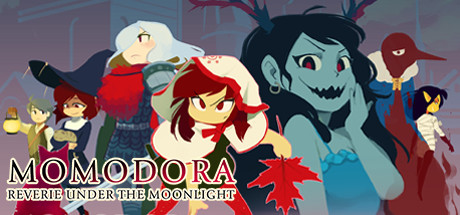
Game Analysis - Momodora; Reverie Under The Moonlight


CORE MECHANIC

Momodora is an Indie Metroidvania 2D-platformer developed by Bombservice and published by Playism. Each enemy is unique in both it's fighting style and movement. The player must approach every enemy decisively. It becomes even more of a challenge when the player is faced with multiple enemies at a single location. This is all stitched together by the tight control mechanics that are placed on the character.

Enemies are cleverly scattered in a puzzle-like fashion. The player must learn the patterns of each enemy and navigate
 both the timing and space they are placed in.

GATING MECHANISM


This game has multiple gating mechanisms. Like other Metroidvania games, Momodora is based on exploration but can lock certain rooms/zones away from the player until they have obtained a certain skill or item. This usage of gating entices the player to backtrack places that have already been explored in an effort to make new discoveries that further help them progress in the game.

 Cat form transformation ability is needed to go in this crevice which is given later in the game. 

Another gating mechanism the player will run into is zone bosses. These bosses block the player's passage to the next zone, giving them a challenge above that of regular enemies.
First boss in the game. A barrier created on both sides which entrap the player into battle.

THE POSITIVE AND NEGATIVE FEEDBACK

Positive feedback comes from successfully dealing the final blow to an enemy. The screen shakes and the enemy flashes into small fragments of crystal shards.
Shards can be used as in-game currency

Negative feedback comes from the player losing health and dying.  This leads to a cutscene of the player's character tumbling and the screen turning black.
Taking Damage
Death Screen

PLAYER LEARNING

Momodora is challenging but doesn't leave the player completely out of the blue. The player starts out in Sacred Ordalia Grove and is given small hints in the HUD that doesn't disrupt the flow of the game. Enemies in the beginning are much easier as well as the platforming.
Example 1
Example 2

STORY INTEGRATION


The beginning of the game gives little clues towards the story. The player starts their journey with a guide saying this is as far as they can take them. The Sacred Ordalia Groves is said to be the least corrupted location in the game, offering a nice environment for the player to learn the mechanics of the game.

Items found later will give descriptions and insight on the game's lore and world. A lot is left in the dark for player and


Interaction with the NPCs flesh also help out the narrative and explain to the player whats going on in the world from the perspective of another character.


Sunday, September 3, 2017

Presentation Reflection

The presentation went well as I tried to prepare as much as I could beforehand. The hardest issue was keeping it under the 3 minute mark which I went over by a bit as well as having to maintain a state of composure under the timer pressure. Overall, I learned a lot about what goes into textures in video games and got to speak with a Ringling Alumnus Max Golosiy who I hope to ask for some more advice in the future.

Texture Artist Presentation